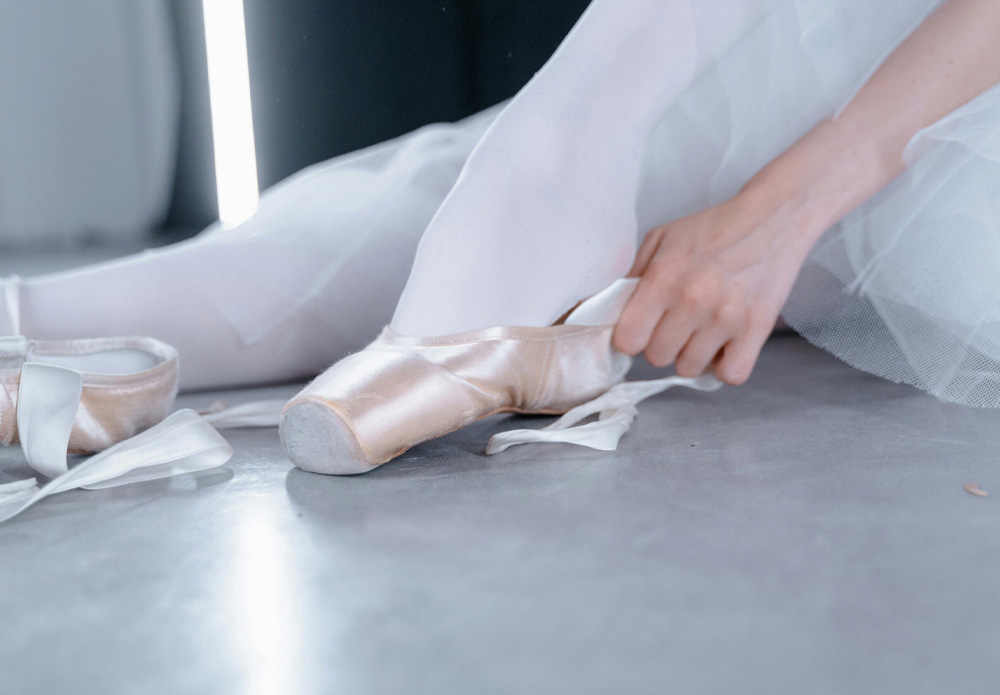
Looking for practical pointe shoe care you can stick to?
This quick guide shows how to make pointe shoes last longer – from daily drying and cleaning to smart rotation and targeted hardening – so your pointe shoe maintenance supports safer, stronger dancing. Use it as a simple checklist for cleaning pointe shoes, extending lifespan, and knowing when to replace a dead pair.
Why Proper Pointe Shoe Care Matters
Pointe shoes are an investment in your training and artistry. They’re also delicate: built from layers of paste-stiffened fabric, paper and satin that work hard every time you rise through the foot and onto the platform. With consistent care, you’ll help them hold their shape, respond better under load, and protect your feet from unnecessary strain.
Below, you’ll find a practical guide to daily habits and simple fixes that keep your shoes dancing for longer – plus clear signs that it’s time to retire a pair. If you’re new to fitting and features, start with what you need to know about pointe shoes, then come back here to set up a care routine that sticks.
Understanding Your Pointe Shoes
Not all pointe shoes wear out in the same way. Differences in shank strength (soft, medium, hard), box construction, wing height and vamp length all affect how they age. A softer shank gives you more roll-through but may soften more quickly; a harder shank can feel supportive for longer yet needs time to break in and recover between uses.
Similarly, a lower vamp may look sleek but might not support certain foot types during repeated relevés. Understanding these variables helps you anticipate where your shoes will tire first, often the box or the shank – and tailor your care accordingly. If you’re working towards first pair readiness or managing load, you may also find our guide to preventing en pointe injuries useful.
Daily Care Tips for Pointe Shoes
Treat care as part of class – not an afterthought.
- Air them out immediately. After rehearsal, remove toe pads and any spacers, open the drawstrings and let the shoes dry in a cool, ventilated spot. Avoid radiators, hairdryers, or direct sun; rapid, high heat can warp paste and crack satin.
- Rotate pairs. If you dance frequently, alternating between two (or more) pairs gives each set 24–48 hours to dry and re-stiffen, extending lifespan markedly.
- Keep them dry. Store shoes in a breathable bag (mesh or cotton). Pop in a small sachet of silica gel or baking soda wrapped in tissue to absorb moisture and reduce odour.
- Mind your pads and spacers. Clean and dry gel or fabric toe pads before returning them to the bag. If you use toe spacers for alignment, wipe them down and ensure nothing damp sits inside the box overnight.
- Flatten the platform. After class, gently press the platform to keep it even, then stuff the box loosely with tissue or a clean sock to help it keep its shape as it dries.
Cleaning and Maintaining the Exterior
Satin scuffs and studio grime are inevitable; careful cleaning keeps shoes looking performance-ready without weakening them.
- Spot clean, don’t soak. Use a barely damp, clean cloth with a drop of gentle soap to dab marks. Blot dry immediately. Never immerse the shoe.
- Tackle rosin and dust. A soft brush (like a clean makeup brush) lifts rosin powder from the platform and pleats.
- Conceal, sparingly. For stage, some dancers blend small marks with a tiny amount of skin-tone pancake makeup or foundation using a sponge. Apply lightly so you don’t saturate the satin or add weight in one area.
- Protect high-wear zones. Clear athletic tape or matching elasticated satin tape over the drawstring opening and sides can reduce fraying. Replace tape before adhesive residue builds.
Strengthening and Supporting Your Shoes
Small adjustments can keep shoes aligned with your foot and delay breakdown.
- Ribbons and elastics. Stitch ribbons securely at the right angle for your Achilles comfort and ankle support; crossed elastics can prevent heel slipping without over-tightening. If you’re unsure, ask your teacher to assess placement while you rise through demi to full pointe.
- Toe spacers and padding. Proper spacing promotes straight alignment through the metatarsals and metatarsophalangeal (MTP) joints, and reduces box deformation. Always test in class conditions; too much padding can deaden feedback and compress the box from within.
- Targeted hardening. Pointe shoe glue (or a fast-setting shellac designed for dance footwear) can be brushed inside the box, wings and tip, or along a softening shank crease. Use sparingly, allow full drying time, and avoid sealing in moisture – glue on a damp shoe traps sweat and accelerates breakdown.
- Shank support strategy. If you consistently “mush” the same spot, add a thin fabric strip or tape on the inside to reduce friction, and consider whether a different shank strength or alternating pairs would better match your workload.
Signs It’s Time to Replace Your Pointe Shoes
Listening to your shoes protects your body.
- Box collapse. The platform feels unstable, the toe sinks or twists, or you can’t maintain a centred balance on full pointe.
- Mushy shank. The shoe no longer supports you through the arch; you feel you’re fighting to get up or to come down with control.
- Permanent twists or cracks. The box or platform tilts inward or outward; you see creases suggesting a structural break rather than normal wear.
- Unusual pain or blisters. New hotspots, toenail bruising, or sudden arch/ankle discomfort often signal that the shoe has stopped distributing load properly.
- Sound and feel change. A sudden “dead” thud or excessive noise on landing can indicate lost stiffness or uneven platform.
When these signs appear, don’t push through. Retiring a pair a week early is far cheaper than managing an avoidable injury. If you’re transitioning from demi-pointe, it’s also worth revisiting whether demi-pointe shoes are necessary for your stage of training.
Tricks to Extend the Life of Your Pointe Shoes
Dancer-tested habits that make a real difference:
- Break in with purpose. Warm the shoe with gentle footwork (pliés, tendus, rises) rather than crushing the box or aggressively bending the shank by hand. Your foot should “teach” the shoe where to move.
- Harden in stages. Instead of saturating the box on day one, apply small amounts of glue to the platform and wings after the first few classes, then top up only where you feel softness returning.
- Use a shoe rotation calendar. Label pairs (A/B) and note dates used. Even spacing classes across pairs gives each shoe a recovery window.
- Travel smart. Don’t bury shoes at the bottom of a tightly packed, humid dance bag. If you must pack while still slightly damp, separate with breathable pouches and unpack as soon as you arrive.
- Refresh the platform. A light sanding of the platform with fine sandpaper restores grip if the satin has gone slick. Keep it even so the weight disperses correctly.
- Store correctly. At home, keep shoes out of bathrooms and away from heaters. A cool, dry cupboard with good airflow beats a steamy studio locker every time.
Caring for Your Investment
Pointe shoes work as hard as you do. A simple routine – airing, rotating, spot cleaning, targeted hardening and timely replacement – keeps them supportive, responsive and safer for your feet. Build these habits into your class flow and you’ll feel the difference in stability, articulation and confidence on stage. For more on choosing the right construction and staying injury-smart as your workload increases, explore our guides on pointe shoe fundamentals and injury prevention en pointe.