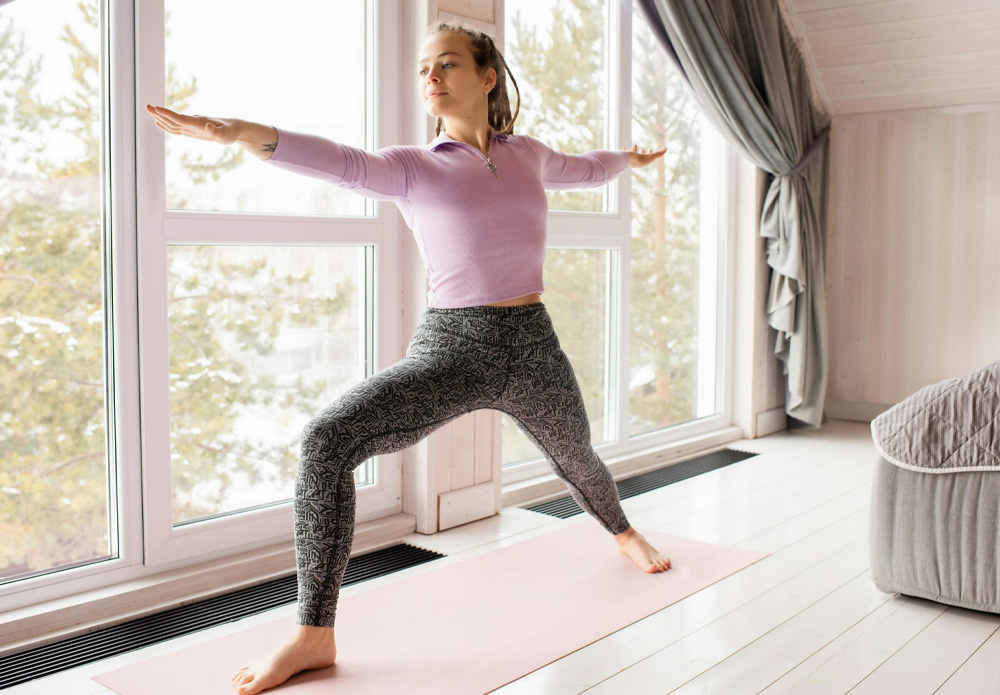
Not every dancer has access to a gym or studio on a regular basis.
Life gets in the way, busy schedules, travel, or the need to just move without needing to leave your living room. That is where at-home ballet conditioning becomes relevant.
Why At-Home Conditioning Matters
With nothing more than a little floor space and your own body, you can continue to develop strength, flexibility, and artistry. Think of it as a way of maintaining your dance foundation, even when you’re away from the barre.
The Benefits Of Ballet Conditioning Without Equipment
Conditioning for ballet doesn’t have to mean fancy resistance bands or gym machines. In fact, some of the best improvements come from working with your own body weight. These types of sessions sharpen your alignment, strengthen your core, and reinforce turnout. They also help with posture, stamina, and control. By doing ballet body conditioning at home and regularly, you’ll be building the physical base that lets technique flourish in class and on stage.
Warming Up Safely Before Conditioning
Jumping right into exercise without warming up is one of the fastest ways to find yourself sore or injured. Begin with some light cardio, jogging in place, casual skipping, or simply dancing around the room to music. Transition from there into dynamic stretches, shoulder rolls, gentle leg swings, and pliés in a natural flow. This wakes up the muscles, gets the blood moving, and loosens the joints for more intense work.
Core-Focused Exercises For Better Balance And Pirouettes
A stable core is at the foundation of ballet technique. It’s what keeps you set during balances, turns, and extensions. The following are some simple core exercises:
- Planks: Hold for 20 to 40 seconds, imagining long lines from head to toe. Engage your abdominals as if you were drawing your belly button toward your spine.
- Ballet Sit-Ups: Lie on your back, arms in fifth. Roll up, keeping arms in port de bras, and roll back down under control.
- Oblique Twists: Sit upright with legs extended, arms in second. Twist slowly from side to side, keeping hips still.
These exercises both strengthen abdominals and offer pirouette and balance control training.
Lower Body Strength For Jumps And Turnout
Leg strength fuels everything from petit allegro to big grand jetés. Try these helpful lower-body conditioning workouts at home:
- Relevés: Rise onto demi-pointe and lower slowly. Perform 3 sets of 15 for calf strengthening.
- Pliés: Perform both demi and grand pliés in parallel and turned out. Mind knees tracking over toes.
- Lunges: Move back into lunges to target quads and glutes. Straight back and chest up.
- Turnout Holds: On back, knees bent, feet on floor. Open knees gently to the side, targeting deep hip rotators.
All of these help with power for jumps, clean landings, and secure turnout. You can also come to our Turn Out Conditioning Class for additional practice in more depth.
Upper Body And Port De Bras Conditioning
Graceful arms don’t happen without strength. Working your upper body at home requires training for both control and power:
- Push-Ups: Modify on knees if necessary. Emphasise lowering with control and pushing back with force.
- Arm Circles: Hold arms out to the side and make small, slow circles. Hold for 30 seconds in both directions.
- Slow Port De Bras: Move through first, second, and fifth with resistance, as if moving through water.
This combination contours the shoulders and arms and teaches the softness and endurance necessary for lovely port de bras.
Flexibility And Mobility Work
Ballet demands flexibility and strength. Take time after your main conditioning to stretch:
- Hip Openers: Gentle butterfly stretches and lunges to release tight hips.
- Hamstring Stretches: Forward bends, seated stretches, or lying on your back with the leg lifted.
- Back Extensions: Cobra stretch or gentle bridges to open the spine.
- Foot Articulation: Flex and point feet slowly while seated on the floor to strengthen arches.
Including this mobility work assists fluidity and extension. If flexibility is a main goal, see our Ballet Stretching And Flexibility Training Guide.
Creating Your At-Home Conditioning Routine
To make gains, consistency is key. Aim for 20–30 minutes, three times a week. A standard session would be:
- Warm-Up: 5 minutes
- Core: 2 to 3 exercises, 2 sets each
- Lower Body: 3-4 exercises, 2 sets each
- Upper Body: 2-3 exercises, 2 sets each
- Flexibility Work: 5-10 minutes
Track your progress. Take note of how many reps you can do, how long you can plank, or how your turnout is in pliés. Small consistent gains build confidence and translate directly to your dancing.
Stay Consistent, Stay Strong
Conditioning need not be complicated or require equipment. With commitment and a targeted strategy, you can build a good foundation in the comfort of your home. Home body conditioning exercises are a chance to fine-tune strength, posture, and flexibility, the qualities that define a dancer’s presence. For performance training or for general fitness, be consistent and remember that every short session adds up.
Home work is not a question of substitution for the studio, but supplementation. You can look at it as carrying your dance practice with you on a daily basis. With regular work, you’ll notice that you improve not just in the manner in which you move, but in the manner in which you feel. That’s the magic of ballet conditioning, it’s simple, direct work that augments every area of your journey.
For more resources, explore our Online Studio where you’ll find classes, courses, and detailed programmes designed to support your growth from home.