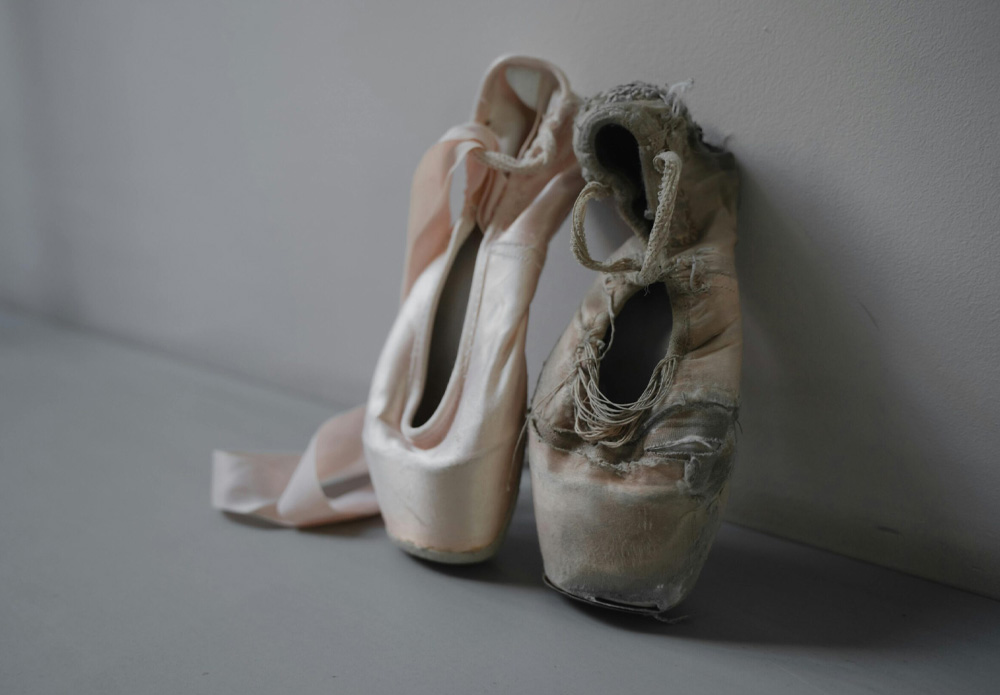
Choosing the Right Pointe Shoes
The right pair should feel supportive but not restrictive, secure but not painful. It should help you work through your feet and legs with clarity – not distract you with rubbing, slipping, or pressure in all the wrong places.
This matters for more than comfort. A good fit can improve your stability, protect your joints, and make your technique feel more consistent, especially if you’re starting to explore pointe work. If you’re still building confidence, this guide to getting started is a helpful reference: Step Into Ballet: A Guide to Ballet Shoes.
So, how do you decide between ready-made and custom? Let’s break it down in a simple, dancer-friendly way.
Understanding Ready-Made Ballet Shoes
Ready-made ballet shoes are the standard, off-the-shelf option. They’re produced in set sizes and widths, designed to fit the “average” foot shape as closely as possible. You’ll usually find multiple width options (depending on the brand), and you may be able to choose between different vamp shapes, soles, and materials.
For soft shoes, ready-made options cover most needs: canvas or leather, split or full sole, and a range of stretch and support levels.
For pointe shoes, ready-made models come in a variety of box shapes, shank strengths, and profiles – but they’re still based on pre-set patterns. A good fitter can often match you with a model that suits your foot, even without customisation.
In short: ready-made shoes are accessible, easy to replace, and often the starting point for most dancers.
Understanding Custom Ballet Shoes
Custom ballet shoes (most commonly in pointe shoes) are made with your specific foot shape in mind. Depending on the maker, this might include:
- tailored sizing across multiple measurements (length, width, toe shape, heel shape)
- material choices (softer or harder paste, different satin or lining)
- structural modifications (box adjustments, wings, vamp length, shank strength)
- asymmetry support (if one foot is noticeably different from the other)
Custom shoes are usually considered when a dancer has a foot shape that doesn’t match standard lasts – for example, very tapered toes, a narrow heel with a wider forefoot, significant compressibility, or a combination that consistently causes slipping, pressure, or unstable alignment.
Pros and Cons of Ready-Made Shoes
Pros
- Convenient and widely available: You can usually try several pairs in one fitting and leave with shoes the same day.
- More affordable: Ready-made options are generally cheaper than custom, which matters when shoes need replacing regularly.
- Easy to experiment: If you’re still learning what you like – or your feet are changing with training – it’s simpler to test different brands and models.
Cons
- Fit can be a compromise: Even in the right size, you may still feel pressure points, gaps at the heel, or uneven support.
- Limited adjustments: You can add padding, ribbons, elastics, and minor modifications, but the core shape is fixed.
- Inconsistency across batches: Even within the same model, shoes can feel slightly different over time.
Pros and Cons of Custom Shoes
Pros
- A closer match to your foot: Less slipping, fewer hot spots, and a better chance of feeling stable through the shoe.
- Personalised support: Shank, box, vamp and wing choices can be tailored to what helps you work safely.
- Potential performance boost: When the shoe works with your foot, balance and alignment often feel more predictable.
Cons
- Higher cost: Custom is an investment, and pointe shoes already add up.
- Longer wait time: You may need to plan ahead for orders and replacements.
- Not always necessary: If your technique, strength, or pointe readiness needs work, a custom shoe won’t replace proper training.
If you’re working towards pointe (or refining your basics), pairing the right shoes with structured progression is key. These are great options for that next step: Beginner Pointe Barre and the Beginner Pointe Course.
Factors to Consider When Choosing
If you’re wondering how to choose ballet shoes that truly suit you, start here:
- Your foot shape: Are your toes tapered or square? Is your heel narrow? Do your feet compress easily?
- Your level of training: Beginners usually benefit from reliable, supportive, ready-made options while learning correct placement.
- How often you train: Higher frequency means faster wear – and practicality matters.
- Your goals: Are you building strength, preparing for pointe, or dancing at an advanced level where tiny fit issues become big problems?
- Comfort vs. feedback: Some dancers love a snug shoe; others need a little more room to avoid pressure. The “right” feeling is individual.
Also consider turnout and alignment. Shoes that encourage rolling in or gripping can make the technique harder. If you’re focusing on turnout stability, the Better Turnout Plan can help you build support from the hips down.
Tips for Testing and Selecting Ballet Shoes
Here are practical ways to make choosing ballet shoes less stressful (and more successful):
- Try them on after you’ve warmed up. Feet change slightly once they’re moving, especially in pointe shoes.
- Test in movement, not just standing. Do pliés, relevés, échappés, and a few balances. In pointe shoes, roll through demi to full pointe with control.
- Check heel security. If the heel slips in tendu or relevé, it usually won’t magically improve later.
- Pay attention to pressure points. Mild snugness is normal; sharp pressure or numbness is not.
- Look for clean alignment. You should feel supported over the platform (for pointe) and stable through the tripod of the foot (for soft shoes).
- Don’t over-pad too soon. A small amount of protection is fine, but excessive padding can hide fit issues and reduce feedback.
- Break in gradually. Especially with pointe shoes, short sessions help your feet adjust and reveal whether the shoe is truly right.
If you’re considering custom, keep notes after each fitting: what felt stable, what slipped, where pressure happened, and what shank/box/vamp details you tried. That information is incredibly useful.
Making the Right Choice for You
Ready-made shoes work beautifully for many dancers – especially when you have access to a good fitting and a model that suits your foot. Custom can be a game-changer for dancers who consistently struggle with fit, need specific structural support, or are training at a level where small issues affect performance and comfort.
The most important thing is that your shoes support your technique rather than fight it. Take your time, test thoughtfully, and remember that the “best” shoe is the one that helps you move well, feel secure, and keep dancing with confidence – whether that’s a trusted ready-made pair or carefully made custom ballet shoes.