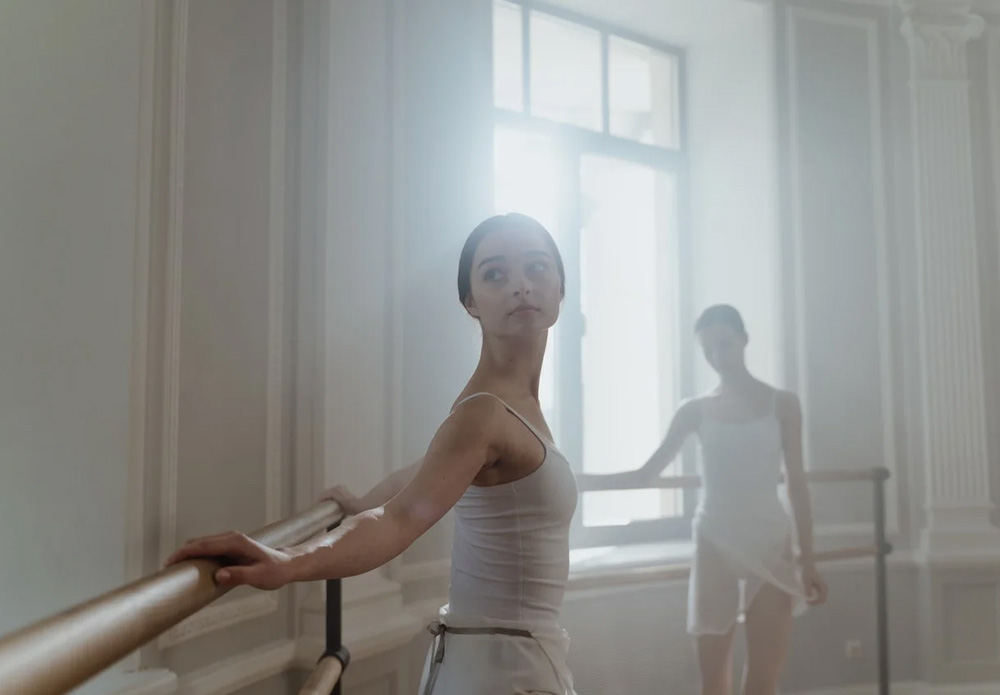
In particular, the hamstrings play a crucial role in many ballet movements, from arabesques to développés. But how can you strengthen your hamstrings for ballet?
In this article, we’ll explore some effective exercises and techniques to help you develop stronger hamstrings and improve your overall dance performance and avoid getting injured .
What are the benefits of hamstring exercises and stretches for ballet?
Before we dive into the specific exercises, let’s first take a closer look at the anatomy and function of the hamstrings. The hamstrings are a group of muscles located on the back of the thigh. They consist of the biceps femoris, semimembranosus, and semitendinosus muscles, which work together to flex the knee and extend the hip joint. In ballet, the hamstrings are particularly important for movements such as arabesques, développés, grand battements, and small and larger jumps.
In general, these exercises will help you achieve:
1. Greater flexibility: Improved flexibility in the hamstrings can help dancers achieve a greater range of motion in movements such as grand battement, arabesque, and développé.
2. Reduced risk of injury: Tight or weak hamstrings can put strain on other areas of the body, including the lower back and knees, and increase the risk of injury. Regular hamstring exercises and stretches can help to keep these muscles strong and flexible, reducing the risk of strains, pulls, and tears.
3. Enhanced performance: Strong, flexible hamstrings are essential for many ballet movements, including jumps, turns, and lifts. By improving hamstring strength and flexibility, dancers can enhance their overall performance and execute these movements with greater control and ease.
4. Improved posture: Weak or tight hamstrings can contribute to poor posture, as they can pull the pelvis out of alignment and cause the lower back to curve excessively. By improving hamstring flexibility and strength, dancers can improve their posture and avoid developing postural issues over time.
5. Greater stability and control: Strong hamstrings can help to provide greater stability and support for the entire body, particularly during jumps and landings. This can help to reduce the risk of injury and improve overall performance by ensuring movements are controlled and more expressive.
What is the difference between active and passive exercises? Is one form better than the other?
Two of the most common types of stretching are passive and active/dynamic stretching.
Passive stretching involves holding a stretch in a fixed position for a period of time, typically 30 seconds to 2 minutes. This type of stretching is typically performed when the body is at rest, and the goal is to gradually increase the range of motion in a particular muscle or muscle group.
Examples of passive stretching for the hamstrings include seated forward folds, standing forward folds with hands resting on a prop or wall, and lying hamstring stretches with a strap or towel.
Active/dynamic stretching, on the other hand, involves moving through a range of motion in a controlled manner. This type of stretching is typically performed before exercise, as it can help to warm up the muscles and prepare them for movement.
Examples of active/dynamic stretching for the hamstrings include leg swings, walking lunges with a hamstring stretch, and inchworms.
Both passive and active/dynamic stretching can be beneficial for improving hamstring flexibility, but they have different benefits and drawbacks. Passive stretching is generally considered to be safer and less intense, making it a good choice for beginners or those with injuries or limited mobility. However, it is not usually as effective at improving performance or preventing injury as active/dynamic stretching.
Active/dynamic stretching, on the other hand, can help to improve muscle activation and neuromuscular control, making it a good choice for dancers seeking to improve performance. However, it can also be more intense and requires greater flexibility and strength.
Regardless of which type of stretching you prefer, it’s important to include both passive and active/dynamic stretching in your routine to ensure that you are addressing all aspects of hamstring flexibility and strength. You may find that one type of stretching is more effective for you than the other, so experiment with different combinations of active and passive exercises and listen to your body to determine what works best for you as your hamstrings get stronger and more flexible.
What is the correct technique for hamstring exercises?
The correct technique for hamstring exercises will vary depending on the specific exercise you are performing, but there are some general guidelines that can help you ensure proper form and technique. Here are some tips to keep in mind when performing hamstring exercises:
- Engage your core: Before you begin any hamstring exercise, engage your core muscles by pulling your belly button in towards your spine. This will help you maintain proper alignment and stability throughout the exercise.
- Keep your back straight: Maintain a straight back throughout the exercise to prevent rounding or arching of the spine. This will help protect your lower back and ensure that you are targeting the hamstrings effectively.
- Use a slow, controlled movement: Perform the exercise slowly and with control, focusing on using your hamstrings to move the weight or resistance. Avoid using momentum or swinging the weight, as this can put unnecessary strain on your joints and decrease the effectiveness of the exercise.
- Maintain proper alignment: Keep your knees in line with your toes and avoid letting them cave inwards or outwards. This will help prevent injury and ensure that you are targeting the correct muscles.
- Don’t overextend: When performing exercises that involve bending forward or leaning back, be careful not to overextend your range of motion. This can put strain on your lower back and increase the risk of injury.
- Gradually increase weight and resistance by using weights: Start with a light weight or minimal resistance, and gradually increase the weight or resistance as you become stronger. This will help prevent injury and ensure that you are making progress over time.
Remember, if you are new to exercising or have any underlying health conditions, it’s always a good idea to consult with a qualified fitness professional before starting a new exercise program. They can help you determine the best exercises for your specific needs and ensure that you are using proper form and technique.
Active and dynamic ballet stretches for hamstrings that build strength and flexibility
To strengthen your hamstrings for ballet, it’s important to incorporate a variety of exercises that target the muscles in different ways. Here are some effective exercises and techniques to try:
- Deadlifts: Deadlifts are one of the most effective exercises for strengthening the hamstrings. To perform a deadlift, stand with your feet hip-width apart and hold a barbell or dumbbells in front of your thighs. Bend forward from your hips, keeping your back straight and your knees slightly bent, until the weights are at shin level. Slowly stand back up, keeping the weights close to your body and squeezing your glutes and hamstrings at the top. Repeat for 3 sets of 8-12 reps.
- Romanian deadlifts: Romanian deadlifts are similar to regular deadlifts but place more emphasis on the hamstrings. To perform a Romanian deadlift, stand with your feet hip-width apart and hold a barbell or dumbbells in front of your thighs. Keeping your back straight, bend forward from your hips, lowering the weights towards the floor until you feel a stretch in your hamstrings. Slowly stand back up, squeezing your glutes and hamstrings at the top. Repeat for 3 sets of 8-12 reps.
- Hamstring curls: Start lying down on the floor with your knees together and slightly off the ground. Keeping core scooped and lower back long against the ground, bend your legs in and out. Keep knees just off ground throughout the exercise. Repeat for 3 sets of 8-12 reps. You can try these out for yourself in this guided hamstring stretch video!
- Swiss ball leg curls: Swiss ball leg curls (you can use a standard pilates ball) are a great way to strengthen the hamstrings for ballet without putting too much strain on the lower back. To perform a Swiss ball leg curl, lie on your back with your feet on a Swiss ball. Lift your hips off the ground and pull the ball towards your glutes, using your hamstrings to control the movement. Slowly roll the ball back out to the starting position. Repeat for 3 sets of 8-12 reps.
- Ballet exercises: In addition to these strength-training exercises, there are also several ballet exercises that can help strengthen the hamstrings. One of the most effective is the développé exercise, which involves lifting one leg off the ground while maintaining turnout and control. You can also try grand battements, which involve lifting the leg high in the air while maintaining control and balance. You can try these classes for yourself with this 20 minute guided video all about hamstring stretches!
When performing these exercises, it’s important to focus on proper form and technique. Start with light weights or minimal resistance, and gradually increase the weight or resistance as you become stronger. Always warm up before exercising and stretch afterwards to prevent injury and muscle strain.
Online and in-studio ballet classes to build your hamstring strength and flexibility
Ballet with Isabella is a leading ballet studio offering classes and workshops for beginners right through to advanced levels. With a wide selection of in-studio and online classes, anyone can improve their ballet performance in a fun and welcoming space! Give it a try with this guided video on Long Hamstring Stretches.