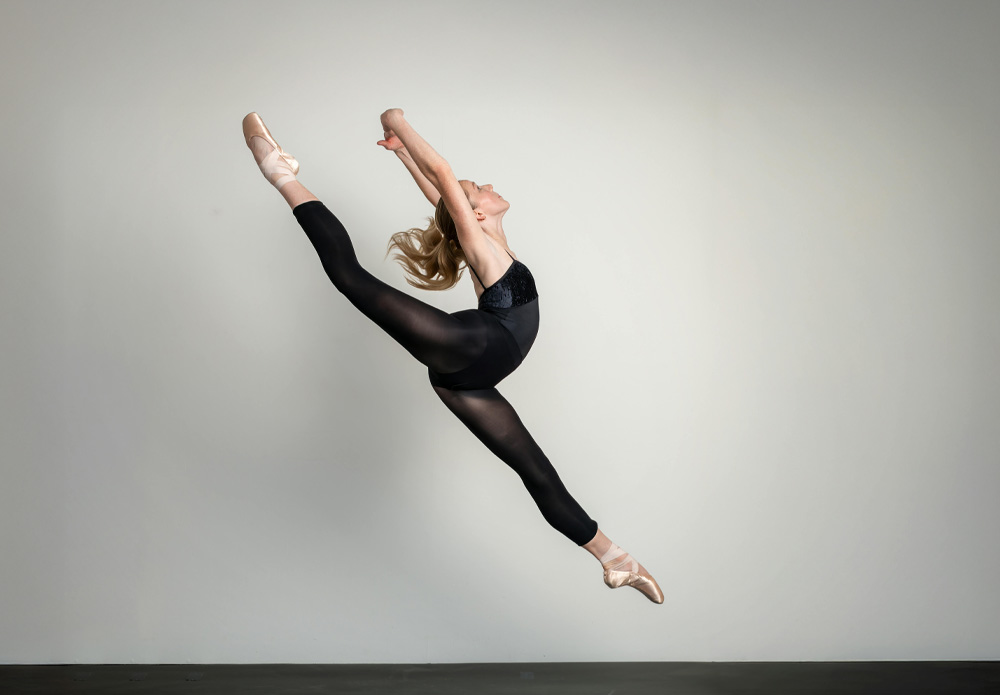
Working on a grand jeté that needs more lift, or is your petit allégro looking a little grounded? Improving your elevation is one of the most common goals for dancers.
You can’t dream your way into the air, though. To master the art of jumping higher, you require a little science, a little practice, and a little toughness of mind. It’s going to require some time, consistency, and training. So, if you’re curious about how to jump higher ballet-style, let’s get down to business.
Why higher jumps matter in ballet
he visual effect of a high, controlled jump can make or break a performance. Jumps in ballet are not tricks; they’re part of the art form’s expression. Good jump height depicts strength, elegance, and toughness. It emphasises a dancer’s athleticism and the illusion of weightlessness.
More elevated jumps also lead the way to more advanced choreography. If your jumps are limited in height or power, your transitions, shapes, and musicality can suffer. Building stronger jumps not only appears more appealing, but it is also more pleasant to dance, as well.
Understanding the mechanics of jumping
Your main jumping muscles are your hamstrings, glutes, calves, and core. These muscles work together to propel you up off the floor and help you land softly and safely.
Cardio plays a big role as well. You need stamina to stay consistent, especially in allegro-heavy pieces. And don’t forget your feet. Good jumps start with foot articulation, heel, ball, and toe, and finish the same on the way down. Timing should also be taken into account. Ballet jumps are not all about pushing; they’re about phrasing. That means taking the right kind of plié at the right moment. Designating an “and” count before a jump gives your muscles the moment they need to prep for power.
Different ballet jumps
There are loads of different ballet jumps, and each requires slightly different mechanics. Think:
- Sauté (simple jumps from two feet to two feet)
- Jeté (one foot to the other, travelling through the air)
- Assemblé (one foot to two feet)
- Entrechat (beaten jumps in the air)
- Grand jeté (one of the most iconic, split-leap style jumps)
No matter which jump you’re working on, they all rely on the same foundations: solid plié, strong feet, explosive power, and controlled landings.
A ballet workout for higher jumps
If you’re ready to turn up the volume on your elevation, try the following ballet jumps exercise set. It doesn’t require equipment, but a resistance band can add difficulty for more advanced dancers. This should be done at least once a week for best results. Don’t forget to warm up first!
- 4th Position Squats (8x each side). Lower for 3 counts, rise in 1. This slow down, quick up timing builds lean muscle and explosion power.
- Hip Lifts (4 pulses front and side, 8x per leg). This builds strength and flexibility in the hip flexors and core.
- Half Toe Touch (8x). Engages the lower abs while improving ankle articulation.
- Double Leg Lift (8x). This helps target the core and lower body for control in landing.
- Straddle “Whacks” (8x). Dynamic stretch and activation for the inner thighs.
- Bridge Pulses. For glute activation and posterior chain conditioning.
- Squat Jumps (8x). This pure power move helps improve vertical height. Focus on pushing through the floor.
- Tabletop Battlements (8x per leg). Kicks in a tabletop position to work on strength and control.
- Circle Taps (8x per leg). This activates the deep rotators and increases hip stability.
- Fast Battements with Relevé (8x per leg). An exercise that works speed, power, and foot articulation. Essential for Allegro.
Want a simpler alternative? Go for a run. Seriously. Running works many of the same muscles and boosts your cardiovascular endurance, which supports better dancing overall.
Tips for long-term progress
Be consistent
This isn’t a one-and-done fix. If you want results, you’ll need to commit. Once a week is a good start. Twice a week is even better.
Don’t skip your barre
Barre isn’t just a warm-up. It builds the footwork and strength needed for big jumps. Focus on clean foot articulation and precise alignment every time.
Check your landing
Use a mirror or film yourself. Make sure your knees are tracking over your toes and your alignment is solid. This prevents injury and sets you up for repeatable, safe technique.
Sync your plié
Especially during fast allegro, use the upbeat or “and” count to prep. It makes a world of difference to your timing and energy.
Use gravity-defying tools
Pools, trampolines, and Pilates machines with jump boards are great ways to reduce impact while practising jump technique. It’s about repetition without wrecking your joints.
You can become a jumper
It’s easy to label yourself based on what comes naturally. “She’s a jumper, I’m not.” But don’t buy into that myth. Like anything else in ballet, jumping is a trainable skill. The dancers you admire didn’t get their sky-high jetés overnight. They trained for them. With the right guidance, smart training, and consistent effort, you can absolutely become that dancer who seems to float mid-air.
Want more help?
If you’re ready to level up your elevation, check out the tips library on Ballet with Isabella. There you’ll find everything from core workouts to alignment drills that complement your jump training. If you’re curious about adding some flexibility training to the mix? We also share loads of helpful insight over on our media & blog page.
What goes up can go even higher
Ballet jumping higher can be no miracle or enigma. It’s just a matter of how to use the appropriate muscles, pick the right exercises, and give yourself the time and space to grow strength the right way. From sauté to grand jeté, every jump is an opportunity to soar. And remember, every inch higher you go isn’t just physical, it’s proof of your discipline, strength, and artistry. So, get to work, stay consistent, and let your dancing take flight.
If you’re still feeling a bit lost or just want tailored help, drop us a message via our contact page, and we’ll help you choose the right plan or course to meet your goals.